paw print

paw print

Sunday, February 2, 2014

Save the lab rats!

Last week I wrote about studies that debunked the myth that GMO crops use fewer pesticides than other traditional farming methods.  This week I will continue to dispel GMO myths and tackle the biggest one of all…

Myth #2: GMOs are safe to eat. 


“There is more than a casual association between GM foods and adverse health effects…. Multiple animal studies show significant immune dysregulation, including upregulation of cytokines [protein molecules involved in immune responses] associated with asthma, allergy, and inflammation.” – American Academy of Environmental Medicine

L-tryptophan hit the news in 1989 when it was blamed for killing several people and permanently harming hundreds of others.  L-tryptophan was produced using genetically modified bacteria and resulted in a disease called Eosinophilia Myalgia Syndrome (EMS).  The symptoms of EMS included overproduction of white blood cells, severe muscle pain and paralysis.  This toxic L-tryptophan was traced back to a Japanese company and although there is still debate as to whether the toxicity of L-tryptophan was due to genetic engineering or a flawed manufacturing, the FDA responded to the crisis by banning L-tryptophan.  Eventually the CDC conducted a study and concluded that only the Japanese manufacturer had an issue with toxins within its manufactured L-tryptophan.   Proponents quickly criticized the CDC stating that this same tragedy is likely to occur again because testing standards are not up to par to detect these types of toxins given the similarity and purity of the synthetic product to its non-GMO counterparts.  

A genetically modified Bt maized called StarLink was criticized in 2000 when people started to report allergic reactions.  The reports were investigated by the CDC and the CDC later ruled that the blood tests it took and studied did not provide evidence that allergic reactions were associated with StarLink.  The investigation was criticized and later reviewed by a panel convened by the EPA.  The panel pointed out that CDC researchers had made several errors in their testing and concluded that there was a “medium likelihood” that a protein within StarLink maize is an allergen. 

GMO supporters have also claimed that a major benefit of GMOs is that they are more nutritious than traditional crops.  Many studies are finding that the opposite is true and GMO crops are actually less nutritious than their counterparts.  GM rice varieties have shown nutritional deficiencies when compared with non-genetically modified counterparts (that were grown in the same conditions).  GM rice showed decreased levels of vitamin E, protein and amino acids and proved that non-genetically modified rice was superior (1). 


As I discussed last week in my blog, some GM crops are engineered to produce a form of insecticide known as Bt toxin.  In a 2012 study, genetically engineered Bt toxins were found to be toxic to human cells (2).  One specific type of Bt toxin killed human cells.  GM lobbyers responded by saying that this type of study (in vitro) did not accurately reflect what happens in a living human or living animal that eats GM Bt crops; however, other studies have found that these types of crops have had adverse effects on lab animals.  Rats fed Bt maize grew more slowly and showed higher levels of certain fats in their blood when compared to rats fed a controlled diet (3).  They also suffered problems with their livers and kidneys.  The authors state that it could not be concluded that this maize is safe and that long-term studies are needed to investigate these consequences further. 

In fact, a common defense of GMO supporters is that long-term studies do not exist. Governments around the world are not requiring these types of studies in order for us all to determine the long-term effects GMOs potentially have but currently, no long-term tests on GM crops or foods are required by regulatory authorities anywhere in the world.  Reproductive and multigenerational tests, which are necessary to discover effects of GM crops or foods on fertility and future generations, are also not required (4).  So let’s give both sides the benefit of the doubt here and say there’s enough evidence to counterbalance both sides.  Would we still want to take our chances given all the unknowns?  Is manipulating our food supply worth it given our successful history of cross-breeding plant (hybrid) methods? What about those potentially damaging environmental effects too? India, Japan, Australia and the European Union aren't taking any chances.  

(1)      Jiao Z, Si XX, Li GK, Zhang ZM, Xu XP. Unintended compositional changes in transgenic rice seeds (Oryza sativa L.) studied by spectral and chromatographic analysis coupled with chemometrics methods. J Agric Food Chem. Feb 10 2010; 58(3): 1746-1754.

(2)      Mesnage R, Clair E, Gress S, Then C, Székács A, Séralini G-E. Cytotoxicity on human cells of Cry1Ab and Cry1Ac Bt insecticidal toxins alone or with a glyphosate-based herbicide. Journal of Applied Toxicology. 15 Feb 2012.

(3)      Séralini GE, Cellier D, Spiroux de Vendomois J. New analysis of a rat feeding study with a genetically modified maize reveals signs of hepatorenal toxicity. Archives of Environmental Contamination and Toxicology. May 2007; 52(4): 596–602.

(3)      Séralini GE, Mesnage R, Clair E, Gress S, de Vendômois JS, Cellier D. Genetically modified crops safety assessments: Present limits and possible improvements. Environmental Sciences Europe. 2011; 23(10).




Sunday, January 26, 2014

Silly Aphids

These days it’s almost inevitable to come across news stories about Genetically Modified Organisms (GMOs).  This controversial topic has made it into the mainstream media and many of us are unsure of what to believe these days.  

So what exactly is a GMO?  By definition, a GMO is a plan or animal that has been genetically engineered with DNA from bacteria, viruses or other plants and animals. 

GMOs boast the ability to –
  • Resist viruses, fungi and bacterial growth
  • Grow faster than their counterparts
  •  Are naturally pest resistant
  • Tolerate extreme weather conditions
  • Have added vitamins and minerals

This all sounds great, right? So why is this subject so controversial? Let's debunk some of the misconceptions around GMOs. 

Myth #1:  GMOs decrease pesticide use

Dr. Charles Benbrook, an agronomist, published a report using USDA data that looked into pesticide use on genetically modified crops between the years of 1996 and 2008.  The report found chemical insecticide use decreased by 64.2 million pounds on Bt maize and cotton over the 13 year period studied.  In sharp contrast, herbicide-tolerant maize, soy and cotton caused farmers to spray 383 million more pounds of herbicides than that would have done if these herbicide-tolerant seeds had not existed.  The decreased insecticide use was greatly outweighed by the increased herbicide use.

This report also showed that herbicide use on genetically modified crop fields has sharply increased.  Herbicide use on genetically modified herbicide-tolerant crops rose 31.4% from 2007 to 2008.  Benbrook identified the main cause of increased pesticide use was due to the spread of glyphosate-resistant weeds.  Glyphosate, also known as Roundup, has been blamed as the cause of these super weeds as those weeds that survive being sprayed with these herbicides pass on their genes to their offspring and therefore create an increase in glyphosate resistant weeds.  Farmers have resorted to spraying more herbicides to try and control this issue but in turn are creating an even bigger issue.


Bacillus thuringienus, or Bt, is a bacteria that lives within the soil and is commonly used as a biological pesticide.  Since 1996 plants have been modified with Bt genes with the intention of having plants be able to produce proteins to protect themselves pest without synthetic pesticide sprays.  Bt was created to combat bugs so, again, this is good right? Not quite….

A study(1) from China on GM Bt insecticidal cotton have showed that GM Bt technology is failing due to increasing issues with secondary pests.  Researchers found that more pesticides were needed over time to control emerging secondary pests such as aphids and spider mites.  GM Bt insecticidal crops have Bt present in all of their cells for their entire lifetime.  This exposes pests to the toxin and is different from traditional insecticides that are sprayed as those are meant to target pests for a brief period of time.  Exposure to something over a long period of time can create an immunity and that immunity is generally passed off to offspring.


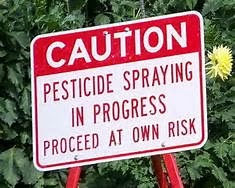
Many studies support the damaging effects of pesticides on our aquatic ecosystems and quality of our soil.  These valuable natural resources feed and support us.  They provide some of us with employment and give some of us hobbies we fully enjoy.  Pesticides have also been linked to a wide range of health issues ranging from headaches to cancer.  Evidence that exposure to pesticides can damage our endocrine systems continues to emerge.  This endocrine disruption can case infertility, birth defects, impair brain development and cause behavior disorders.  Ingesting food that has been exposed directly to these pesticides increases our risks for developing negative health consequences.  GMOs give us even more direct access.  In next week’s blog, I will continue to dispel myths regarding GMOs in hopes to provide more clarity around this issue.  

(1)    Zhao JH, Ho P, Azadi H. Benefits of Bt cotton counterbalanced by secondary pests? Perceptions of ecological change in China. Environ Monit Assess. Feb 2010; 173(1-4): 985-994.

Sunday, January 12, 2014

Flight of the Bumblebee


I’ve been tasked this quarter to blog about a topic of deep interest to me.  There are a lot of things I feel passionate about and my dilemma became which topic to choose.  Should I discuss the downfalls of our financial industry?  Should I take a deep dive into animal welfare and rights?  The self-esteem issues our beauty industry promotes is disturbing and maybe I could shed more light why that industry needs to improve?  After much deliberation, I decided this quarter I will focus on the importance of organic gardening and farming. 

Why organic gardening and farming?  Well it mostly comes down to the importance of healthy and nutritious food.  Food fuels us and access to healthy and nutritious food is a cornerstone to our well-being and development.  Studies have shown that “traditional” farming methods that the use pesticides and synthetic fertilizers affect our food's nutrition and are also harmful to our environment and disrupt beneficial eco-systems.  Organic farming and home gardening represent a deeper respect for the soil and plants as it focuses on using natural solutions to control issues that we so commonly look towards bottled products to solve.   

So let me give you a little taste of the type of topics I plan to cover…

Pesticide use became popular as it is a means to control insects that damage our food crops.  But what about all those beneficial insects that get caught up in the pesticide crossfire?


Have you ever stopped to watch a bumble bee buzzing around in a flower?  Have you ever noticed that when it comes out, it’s covered with little specks of pollen? It’s actually kind of cute to the fuzzy little thing covered in the fruits of its labor.  We've all heard about the decline in bee populations through some sort of news source but what does this all mean?  Why should everyone be concerned about the disappearance bees? The simple answer is because we all need to eat.


All the experts agree that the decline in bee populations have had a devastating effect on the agricultural industry.  According to the USDA, bees pollinate 80 percent of flowering crops that make up 1/3 of everything we eat.  Losing bees would not only affect common foods such as apples, broccoli, strawberries, nuts, asparagus, blueberries and cucumbers, but may threaten our beef and dairy industries if alfalfa is not available for feed.  Although multiple causes are sited, most of the experts agree that pesticides have at a minimum added to the decline of bee colonies (also known as Colony Collapse Disorder).  In fact the European Union has seen enough evidence to support the damaging effects of pesticide use on bees and recently banned the use of certain types of pesticides.   


The use of pesticides and how they harm bees is quite complex.  Studies conducted by the European Food Safety Administration (EFSA) found that pesticides frequently appear in the nectar and pollen of plants. Bees not only have to fear being sprayed by pesticides but also have to fear ingesting these chemicals via their food supply as well.  The research shows that pesticides damages a bee’s ability to return to its hive, decreases the number of queens that a hive breeds each year, and increases a bee’s susceptibility to disease.  All of these factors have led to the 50% drop in honeybee numbers in the last quarter century.

So what can we do as individuals to help bees? Mother Nature Network lays out a great plan to help make your life a bit more bee friendly.  These simple things are great ways to increase our reliance on organic gardening and less so on those toxic methods currently being practiced.  

Save the bees! 

No, seriously, save the bees! 

Friday, December 20, 2013

Can a leopard change its spots?

As I sit here wrapping up my first quarter of grad school at Bainbridge Graduate Institute, I’m almost at a loss for works.  I’m having difficulty putting my thoughts down because my head feels like a tornado has been unleashed and my thoughts are flying around waiting to land at the first sign of peace.  This quarter has taken me on many journeys and I’m proud to say that I finished this quarter with a new outlook on life.  My expectations for the quarter have been far surpassed and the inspiration I’m feeling has become contagious.  I’ve surrendered to the unique experience that is BGI and I am committed to making this experience more than just getting a master’s degree.  


So what has me so jazzed? One of the core principles BGI embodies is the need for change. I've always been an advocate for change and I've always felt this world could be better if change was more readily accepted.  Despite the stereotypes around my chosen professions, I thrive in change.  I love the feeling of trying something new or challenging the habits and beliefs we hold as sacred.  Why do so many people struggle with change even when it’s desperately needed? To me it all comes down to the desired feeling of security.  There’s a fear of the unknown when it comes to change and that puts people outside of their comfort zone.  BGI has taught me to be comfortable with the ambiguity that change can sometimes create.  Sacrificing the desire to always feel secure is a small expense in making this world a better place.  

The beauty of each BGI intensive is the opportunity for multiple types of learning.  One of my favorite parts of the intensives is the Change Agent in Residence (CAIRs) talks.  The personal stories, heartfelt passion and knowledge these individuals impart on us in amazing.  Michael Kanter taught me that staying true to your core values is an invaluable asset.  Steve Butcher showed me that for-profit businesses can have compassion as a mission.  Mirran Raphael reminded me mentorship is incredibly powerful and a lifelong journey.  Jeff Mendelsohn encouraged me to live in a world of possibilities and not one of limitations.  Seeing change in action and hearing of its success creates an environment in which we are set up for nothing but success.  

This quarter has opened my eyes and made me see what assumptions I've made about the business world.  I wasn't expecting to be so inspired by all the negativity that our current economic system has created.  I know that sounds a bit bizarre but I feel like a fire has been lit under me.  For a while I've felt a bit of hopelessness about the world we've been living in but I failed to be able to put words to it.  Through the readings, videos, and lectures I've been partaking in, I now have a voice for these feelings.  This world is destined for change and to be part of this paradigm shift we so desperately need is an opportunity I feel nothing but gratitude towards.  This hopelessness is no longer feeling as such but feeling more like empowerment instead. 

Another key learning opportunity for me this quarter was the work with the Chicken Sweaters on our group project.  Working with Julia, Liz, Maren and Brittany has taught me to value those tough moments and difficult conversations that need to be had.  The process of team work is just as valuable as the product that is created.   The complexity and dynamics of human relationships are fundamental to understanding our potential within this world and enacting change.  BGI enables us to co-create an educational process that will keep us on a path of lifelong learning and having the skills to work in teams is essential.  

I have a deep appreciation for BGI and how it forces me to reflect.  I don’t often reflect on my actions, learnings and experiences and I've really come to value the opportunities for it.  Working with faculty, guest speakers and my cohort is a transformational process and it’s important to me to get the most out of this experience.  Our cohort is amazing and when I think of the possibilities ahead of us all, I can't help but be excited.  We have several CAIRS with in our group already and the passion we all share for changing this world is nothing short of inspirational.  They say a leopard cannot change its spots but are we sure?   


Monday, December 16, 2013

The Song of the Grasshopper


money
noun, often attributive \ˈmə-nē\
: something (such as coins or bills) used as a way to pay for goods and services and to pay people for their work

“Today we associate money with the profane, and for good reason. If anything is sacred in this world, it is surely not money. Money seems to be the enemy of our better instincts, as is clear every time the thought “I can’t afford to” blocks an impulse toward kindness or generosity. Money seems to be the enemy of beauty, as the disparaging term “a sellout” demonstrates. Money seems to be the enemy of every worthy social and political reform, as corporate power steers legislation toward the aggrandizement of its own profits. Money seems to be destroying the earth, as we pillage the oceans, the forests, the soil, and every species to feed a greed that knows no end.” –Charles Eisenstein, Sacred Economics


It’s no surprise that as a CPA and a Banker, my life is riddled with money.  I measure it, report on it, forecast it, budget it, and spend it.  Yield curves, present values, bond prices, and interest rates rule my world.  What do all these things really mean?  Why do we value money the way they do? How do our views and assumptions of money affect our behaviors? These questions and more have been flowing through my mind a lot lately.  My BGI experience has given me a new outlook on the meaning and purpose of money and I dare say a rug has been pulled out from underneath me.   

I recently was tasked with reading a powerful book, Sacred Economics by Charles Eisenstein, which traced the history of money from ancient economies to modern day capitalism.  Money has had a profound impact on our civilization and shaped us in more negative ways then we care to admit.Reading this book left me feeling depressed but hopeful for the future.  Without fundamentally changing our assumptions around money and the pedestal we place money on, economic turmoil is bound to happen again.  

One of the most profound points within this book, and one that I've also heard from many of my classmates, is the idea of bringing back gifting and bartering.  When you give a gift with no strings attached or trade goods and services, trust within our fellow human beings flourishes.  This trust binds communities and strengthens relationships.  Einstein states that “Community is not some add-on to our other needs, not a separate ingredient for happiness along with food, shelter, music, touch, intellectual stimulation and other forms of physical and spiritual nourishment.  Community arises from the meeting of these needs.”  Why is it that each house in our neighborhood owns a lawn mower that is only used for 10 hours each summer?  Why has it become so normal to value the goods we purchase just as much (if not more than) as the relationships we value?  We've become a society that focuses more and more on our individual needs and not the needs of our communities.  Imagine a world where community evolves naturally from our actions and supports and values its members equally.  Imagine the feelings you have when you spend time with loved ones during the holidays and the joy you feel from their care, love and support.  What if you could feel that more often?

Trust is the crux of our relationships with friends, family, doctors, co-workers, political leaders and everyone we interact with.  Without trust the true purpose of relationships ceases to exist and we truly can’t get to where we’re trying to go.   An absence of trust creates dysfunction and enables an environment in which productivity and happiness cannot prosper.  No matter how you slice it, trust plays a fundamental role within our lives and money can damage that trust.    

The great thing about Eisenstein’s book was that he makes suggestions for alternative practices that will “fix” our broken economy, help to redeploy the community spirit and invigorate the respect that is needed for the well-being of our planet.   Although some of the concepts were hard to wrap my head around, such as negative-interest, I was truly inspired by his ideas.   He helped me to envision a different type of economy where life is a bit more simplistic and relationships are more meaningful and less superficial.


The underlying theme of Sacred Economics is very similar to other articles, videos and books I've been exposed to at BGI.  My eyes and ears are awaiting more.  I have a new view of the negative effects our money system has and seeing things more in this light has given me clarity I wouldn't have expected.  This student grasshopper is changing and the chirps I make will be much more meaningful going forward.


Sunday, November 24, 2013

Baaahhhhhhhhhhh said the sheep

In 2012 I have the opportunity to spend several weeks in Ireland.  The beautiful scenery, abundant and humbling history and the chatty and welcoming people made this trip better than I could have ever imagined.  Of all the places I explored, one of my absolute favorites was the Kissane Sheep Farm.  This farm has been in the family of John Kissane for over 150 years and is home to over 1,000 sheep.  I fell in love with the farm and upon talking more with John, I found myself captivated by his story.  


Ireland’s sheep farms are heavily subsidized by the European Union.  The income of average sheep farmer in Ireland is approximately €12,000 annually and for most farms, subsidies account for more than 50% of that income.  Due to changing European regulations, increasing food and medical costs, and declining prices of lambs and wool, it is less economically viable to raise sheep in the traditional way – but why? 

The globalization of Ireland’s economy has played a major role in the deviation from traditional farming.  Sheep farming was once a highly honored tradition and occupation but is now viewed as a risky and unprofitable endeavor. Sweaters, socks and blankets were the most commonly produced woolen goods and since locals were only able to make enough for themselves, an export industry was virtually non-existent at one time. However, in the 1890s, the British government pushed to improve local industries in Ireland by encouraging large scale textile production.  Because of this the wool industry grew dramatically but deteriorated in the first half of the 19th century when the linen industry outpaced its growth and demand for exports dramatically decreased. 

Today a majority of the wool from John’s flock is shipping off to France where it isn’t used to make clothing, rugs or other household goods.  The wool is actually worth more to many other countries for its lanolin that is used in many cosmetic and skin care products.  What was remarkable to me about my conversation with John is that I had been in the market for a handmade Irish wool sweater.  As he was telling me about how his wool is exported, all I could picture were the dozens of sweaters I had pondered purchasing over the last few days that had tags detailing that the wool came from some other place besides Ireland.  


Ireland is one of the most globalized economies in the world and was once referred to as the Celtic Tiger.  During this Celtic Tiger boom, Ireland went from being one of the poorest countries in the EU to one of the richest.  As Ireland offers one of the world’s lowest corporate tax rates, it has attracted many large multinational corporations such as Google, Amazon, and Pfizer to set up shop and helped to create many jobs.  That led to prosperity and caused a housing boom similar to the U.S. that eventually blew up, taking down the housing market and the banking system.

In 2008, it became apparent that the Celtic Tiger was dead and recession was setting in.   GDP was falling, unemployment was increasing and real estate prices were falling at an alarming rate.  In 2010, Ireland was forced to seek multi-billion dollar loans from the IMF and EU and in 2011, Ireland’s bonds were downgraded by Moody’s and labeled as junk bonds.  Ack!


The story of the Celtic Tiger is complicated but fascinating.  Whenever I walked into a pub or restaurant, the locals were always quick to discover that I was a tourist and not just any tourist but an American tourist.  The Irish have such a profound history and when you couple that with their gift for gab, you find yourself in deep conversations with a community that accepts your presence with open arms.  Just like in the U.S., banks and politicians were blamed for the Irish recession but one key learning emerged for me – the Irish were dealing with the economic turmoil in it a much different way than we were.  Community and culture preservation are a daily focus for the Irish and because of that, they are a phenomenally resilient group of people.  For hundreds of years, Ireland has been plagued with war, family and disease and at one time, Ireland’s largest export was its people.  These key events have made the Irish who they are and after my trip, I had a whole new outlook on the global economy and the importance of local living economies.  


John is diversifying his business to keep it alive. At Kissane Sheep Farm, you can Adopt-A-Sheep and help preserve the more classic Irish heritage of family farming or you can simply stop by for a tour that includes a sheep herding demonstration and shearing demonstration.  If you’re ever in the Ring of Kerry, I highly suggest making the stop and having a conversation that will be deep and meaningful with John and his family.  You won’t regret it!  

Saturday, November 2, 2013

The Economics Behind a Painting Bulldog

Merriam-Webster defines economics as "a social science concerned chiefly with the description and analysis of the production, distribution, and consumption of goods and services." This flat and one-dimensional definition does not touch on the personal side of economics. Economics pervasively affects systems and people at all levels and because of that, human emotions play a large role in the economy. You can throw a bunch of graphs at me and tell me what today’s GDP totals are but don’t expect me to draw my conclusions of what's happening based solely on that. As emotional beings, we’re largely affected by what’s going on around us and directly in front of us. You can tell me things are getting better and today’s recession has ended but until I see it, I won’t change my current habits and behaviors. 

Our country has been shaped through strong capitalist leaders such as the Cornelius Vanderbilt, Henry Ford, John D. Rockefeller and Andrew Carnegie. Our quality of life has grown exponentially over the last two centuries and growth within the economy has enabled that to take place and because of that, we've been taught that economic growth = good. 


Towards the end of my undergraduate years, where I got the bulk knowledge of economics, our economy was growing fast. I had just taken my first big job and was excited for the possibilities the future would hold. Many of my friends were buying $350,000+ homes in anticipation of continuing to “make it big.” Our emotions tied us to building our futures on the assumption that there was no end to this bright side. We were too young to remember the prior recessions that our parents were more than willing to quickly forget. Then in early 2007, a different reality started to hit…

Right now I can’t think of one person I've come across who hasn't been affected negatively by the current recession. It’s hard to think about the “good economic times” when you see an abundance of unemployment, foreclosures, closing businesses and increasing debt all around you. Since people are emotional beings we can often feel a form of resentment when we think about the exponential growth that got us here. How could <insert name, company, government entity here> have allowed these events to unfold? How could we have been so blind to not have seen these bursting bubbles? How? Why? 

As a banker, I've seen my fair share of despicable behavior over the few years. I’ve worked on several projects involving failed banks and the things I’ve seen and heard have struck me to my core. Don’t get me wrong, there are definitely more good guys out there than bad guys; but again, our emotions come into play and make it easy to forget there is good out there! (If you think the concept of a good banker is an oxymoron, let’s talk!) 

This recession has been rough but there’s still an upside to a growing economy. Economic growth provides a strong base for research and development. Without research and development, we wouldn't have things such as new medications and breakthroughs in technology. Economic growth can also provide for higher employment and can entice employers to pay greater wages and/or pay for benefits such as 401k contribution matching or disability insurance. This growth also allows for opportunities and confidence for new players to enter the market. Take for instance Piper, the one-eyed painting bulldog. Piper has her own business selling custom artwork. Piper is capitalizing off of her cuteness and talents. She has found a niche in the market. The income she's producing is perhaps paying for her vet bills, food, and toys. It also may be paying back the initial capital supplied by her human parents and therefore allowing them to invest in other arenas (perhaps a new home for the cat? ha). Economic prosperity (as well an economic downturn) is an interconnected cycle that acts like a tornado in swooping up many of us along its way.


So what does this all mean? If I were to write this blog in another week, I’d most likely have a completely different story to write up. As I continue to process and reflect (I’m a “go, go, go” type of person and because of that, I don’t stop and reflect as much as I should) my thoughts and patterns are ever changing. I will say for sure that I do believe a new wave of economic thought is forming. Maybe it’s more apparent to me because of the core values my generation owns but I don’t think that’s all of it. I believe we are entering a “new” normal. The many assumptions held in economic models is mind boggling enough to make one feel like they are reading an ancient Latin text on Mars. With the internet and concept of instant knowledge at our finger tips, our world is forever changed. Knowledge is power and it’s that knowledge that gives us the ability to affect change. Let's go out there and make history C12s!


-Emily

www.facebook.com/emywoo
http://www.linkedin.com/pub/emily-olson/21/292/b49